

Getting Playful with Unwanted Guests of the Mind
A goofy video, a Rumi poem and working with difficult emotions

I've mentioned the responsibility we have to name the emotion or the feeling,
But the word “responsibility” sounds duty-bound and heavy. So let’s inject a bit of levity into this process. We’ll start with the actual name. Yes, you could call your internal experience sadness or joy or anger or fear.
But what about … Brian?
A metaphor in Acceptance and Commitment Therapy centers around an unwanted guest at a party. A video depicting this metaphor (which I’ll leave at the bottom of the post) introduces the “unwanted feeling” as a boorish character sporting a 5 o'clock shadow wearing a tank top with holes and armpit stains. There is a stink around him. The video calls this balding, flabby character “Brian.”
The name sounds rather generic to my ears, and yet it does bring a smile to my face.
Anyway, this unwanted guest leaves the protagonist of the video aghast and the party host determined to get rid of him. That attention deprives our hero of enjoying the rest of the gathering. However, he begins to learn that keeping “Brian” out is a fool’s errand and the hero decides to focus on the others. This lessens “Brian’s” impact and the host can return to what he hoped for all along - a good time.
This playful approach of naming difficult emotions with lightness is something I introduce in session. Some people will name anger or shame by connecting the experience to TV or movie characters. The creative folks will concoct an internal avatar. More than a few times I've had people use an expletive for their character. One person used (and I’ll be PC here) his “MFer” to name a harsh, critical internal voice. In session, we talked about the “MFer” when the client criticized himself in the moment or when that thought showed up over the previous week.
This points out the added benefit having some fun when identifying difficult feelings and thoughts - it allows you to befriend it. I suppose it might seem hard to befriend a character called an “MFer” and the client and I were consistently amused. That opened the door to discussing how the thought/feeling/emotion serves him. The client’s critical voice could be a spur to change or to reassess an action. Then our discussion focused on appreciating the message from the internal experience rather than only the discomfort from the shame or guilt.
Last week someone shared with me a poem that is an elegant and playful way of expressing the befriending of an emotion - “The Guest House” by Rumi.
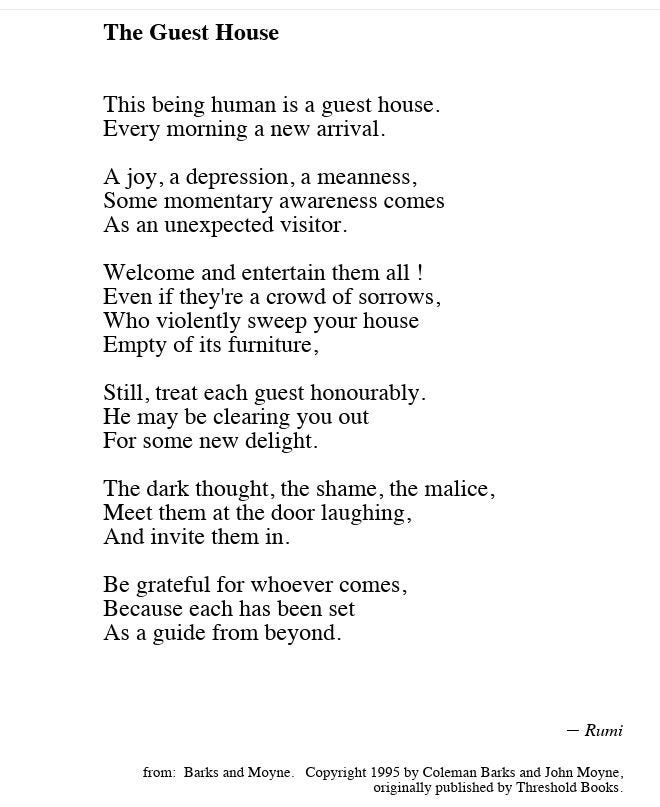
Imagine seeing painful experiences as things to be welcomed and entertained. It can be done with more regularity, if we establish a practice. So, while we do have a responsibility to ourselves to name the painful internal stuff, it doesn’t have to be a solemn duty at all turns.
The Unwelcomed Party Guest video (an admittedly goofy one).